This website presents a special variation of Conway’s Game of Life called Genetic Life.
The Game of Life is a pattern generator where the human player draws a starting pattern and then watches the changes made by the computer. The goal of the game is to find and enjoy patterns that evolve in interesting ways.
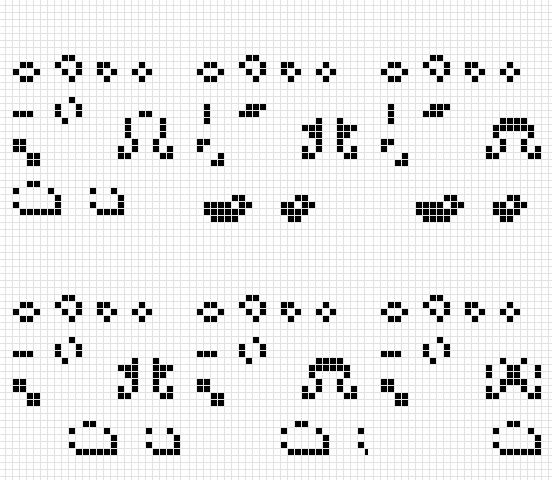
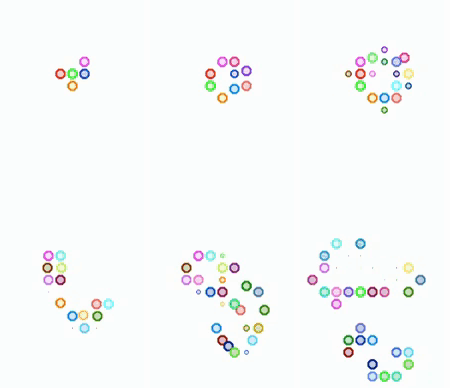
Kok’s Galaxy

Classic Life
The classic version of Life is played on an infinite grid of square cells. It begins with a human-drawn pattern of occupied cells in the first generation. Subsequent generations are drawn by the computer:
Classic Patterns
Check it Out
A great introduction to classic Life can be found at:
• https://conwaylife.com/
It includes a Life game you can play in your browser.
Genetic Life
Ents
The patterns that evolve in Genetic Life are the same as those in the classic version. The primary difference is that filled cells are said to be occupied with manifest entities – called “ents”. When a new ent is born, because three of its adjacent cells contain ents, the new ent is designated as a child of the three specific ents that are its neighbors. Similarly when an ent is destined to die because of insufficient neighbors (underpopulation), or due to an excessive number of neighbors (overpopulation), then the ent itself no longer occupies its former containing cell.
To better describe the cell activity in genetic Life, changes are called Arrivals and Departures rather than Births and Deaths.
Superficially the visual effect is similar. Under the surface however, a great deal more is happening:
Births and Deaths
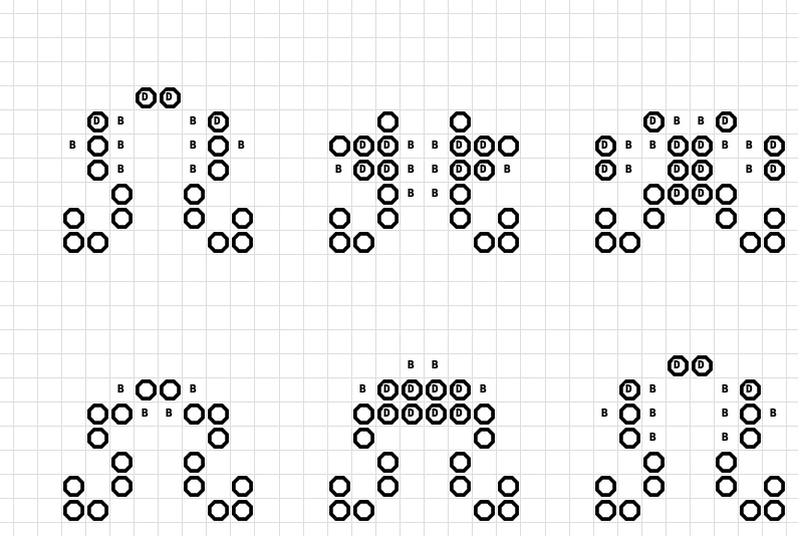
Arrivals and Departures
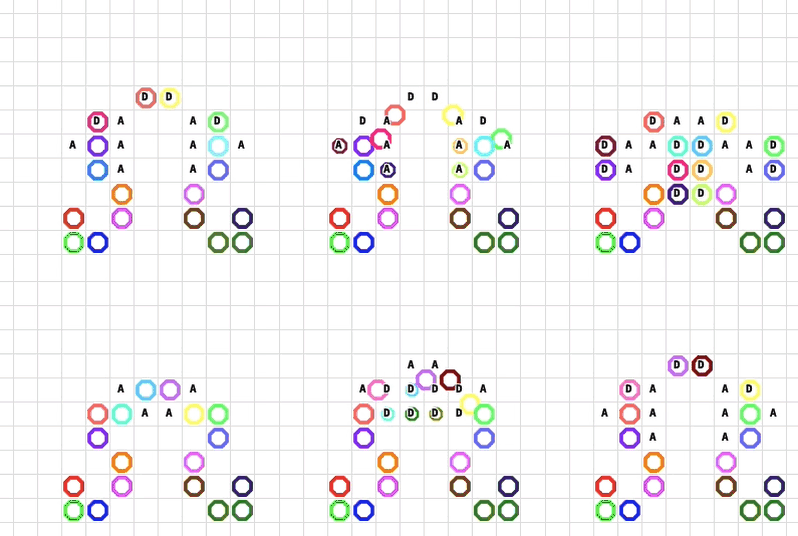
Aesthetics of Life
Classic Life – Faster Life in Smaller Cells
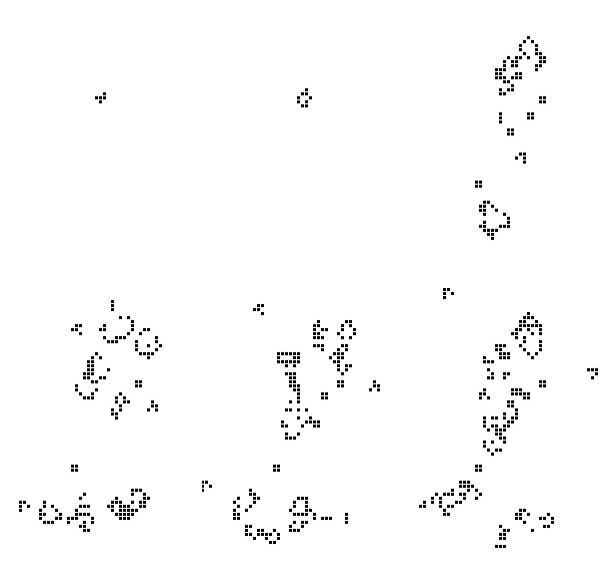
Classic life is often a story of generations in the small. Implementations are frequently considered superior for the board size and speed at which generations can be displayed.
Shown here is the R-Pentomino pattern, classified as a Methuselah pattern that grows for a long time. In this case evolution continues without end due to the gliders sent out into empty cell space.
R-Pentomino
Genetic Life – Slower Life in Larger Cells
Genetic life is more of a story in the large. Inheritance and interactions can often only be seen by watching smaller sections of the board at a slower rate. Five ents in the shape of a glider can orchestrate a dance that propels them across the board, with no need for any births or deaths. A stable pattern is a group of aging ents with no movement or other interactions.
A primary goal in the design of OLife was to minimize the size of the ent population. An emphasis was placed on preservation of ents for as long as possible. All ents are kept around for the lifetime of the evolution.
R-Pentomino
Previous: Index Next: Object Life